

Every summer, people across central Virginia start asking the same question at roadside stands and grocery stores: are these Hanover tomatoes? The name carries weight. Ask locals what makes Hanover tomatoes so good and you will hear about soil, tradition, heirloom seeds and a festival that has run since the 1970s. Some of those answers hold up. Others are local legend, even if they make a good story.
Here are five things people often believe, and what growers and experts actually said when asked.
Myth 1: The Hanover tomato is a special variety
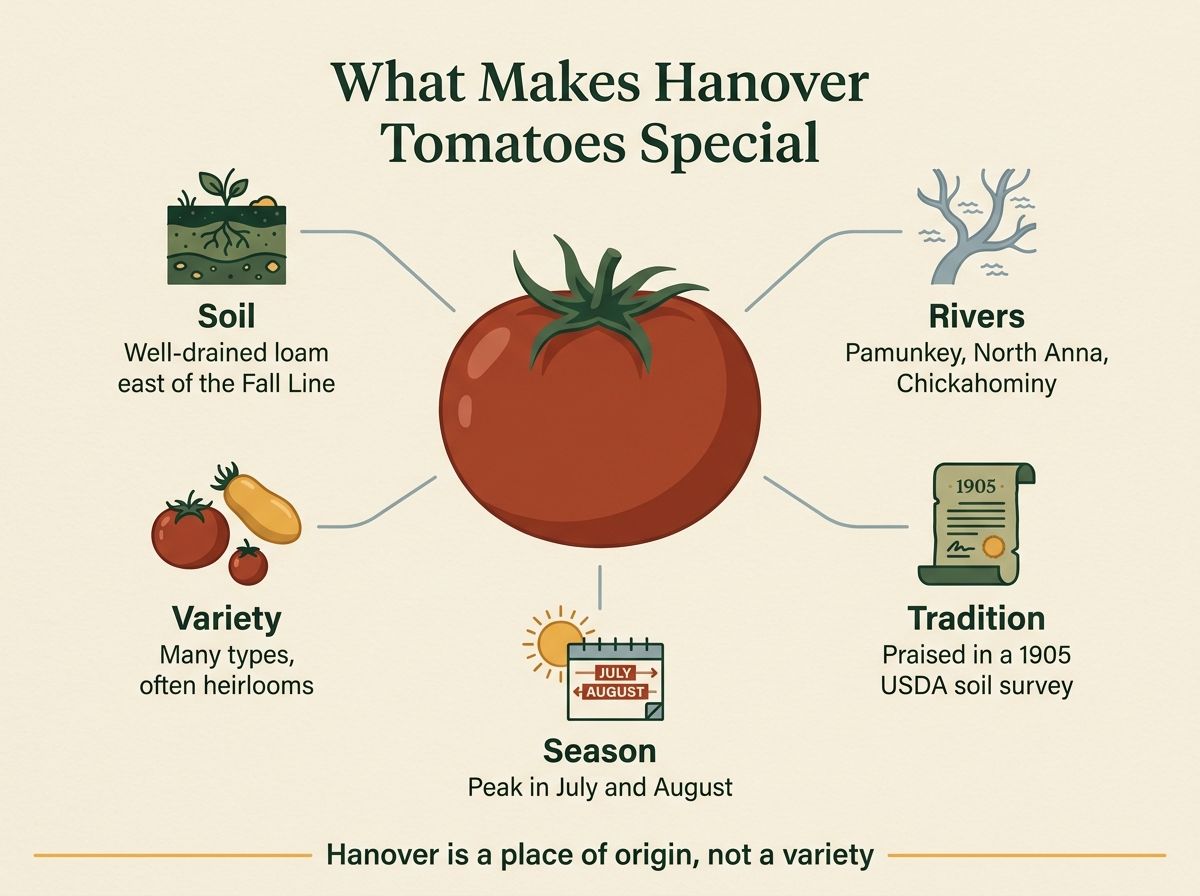
There is no single variety called “Hanover.” The name describes where the fruit was grown, while the seed itself can come from any catalog. Growers here plant many kinds, from standard red slicers to heirlooms in shades of pink, yellow and purple. A beefsteak grown in a field near Mechanicsville is a Hanover tomato. The same seed planted in your garden in Ohio is just a tomato.
Faye Prichard, who represents Ashland on the Board of Supervisors, told VPM News that the best tomatoes have “a little bit more depth” of flavor. She credits heirloom types for much of it, and she said the very best ones grow in her own backyard garden. That fits how many locals describe the taste: sweet, acidic and juicy at the same time.
Myth 2: It is all about the soil
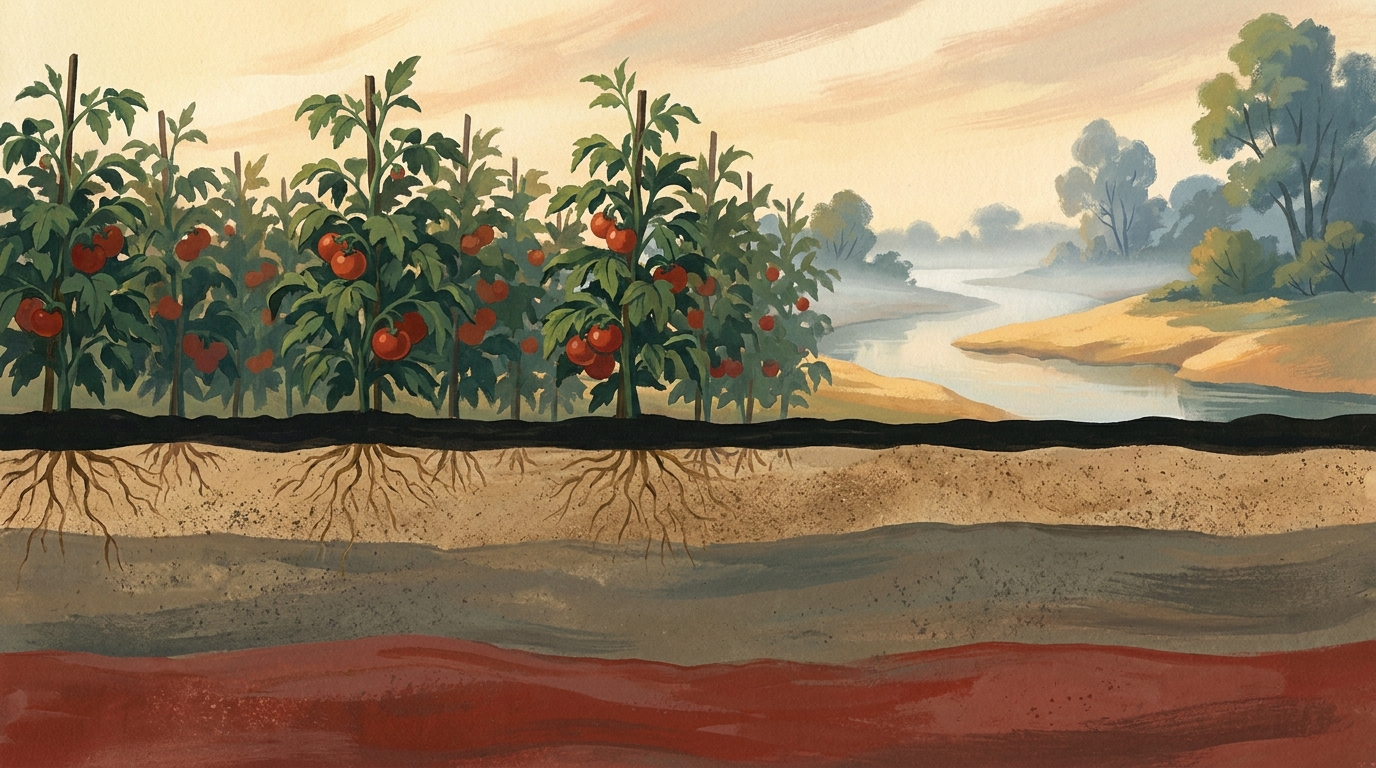
The soil matters, but it is only part of the story. The county sits on the Fall Line, the boundary where the soft sediments of the Coastal Plain meet the hard bedrock of the Piedmont. East of that line, much of the county has sandy, well-drained loam. The red clay that is common farther west holds more water.
Scot Ferguson, the Virginia Cooperative Extension agent for agriculture and natural resources in Hanover, describes the eastern soils as well-drained and loamy and “excellent for vegetable production.” Loam drains quickly but still holds enough moisture and nutrients, which is what tomato plants need. The Virginia Cooperative Extension guide to tomatoes lists well-drained loam as the soil type for the crop.
Ferguson is careful to avoid crediting one magic ingredient. The rivers matter too. The Pamunkey and North Anna along the northeast and the Chickahominy to the south have deposited silt, sand and clay over a very long time, and they provide water for irrigation.
Myth 3: Volcanic ash made the soil rich
You may hear that ancient volcanic ash is the secret. Virginia did have volcanoes, but the two known ones were in Rockingham and Highland counties, far to the west in the mountains, and they were active millions of years ago. In the VPM interview, Ferguson neither confirmed nor ruled out the story. He pointed instead to millions of years of geological change that shaped the soils. For now, the volcano remains a good tale rather than a proven fact.
Myth 4: The fame is just clever marketing
Some skeptics say the Hanover tomato is mostly a brand. The record suggests otherwise. A USDA soil survey from 1905 already described the tomato crops from Hanover as being of excellent quality, decades before anyone thought of a festival.
Still, tradition and promotion have helped. The annual Hanover Tomato Festival began in the 1970s as a fundraiser for the volunteer fire department. Today the event is held every July at Pole Green Park in Mechanicsville, with music, food vendors, tomato contests and free entry. In 2026 it reached its 48th year. Ferguson sums it up: Hanover’s farming is “really about history and tradition.” Hanover could just as easily have become known for tobacco, he said.
Myth 5: Growing famous tomatoes pays the bills
Fame is no guarantee of a living. Jeff Sears, whose family has worked the land near Ashland for five generations, told VPM News that his place is known for its tomatoes, but Hanover tomatoes alone leave his costs uncovered. Prices for fuel, labor and supplies have climbed faster than what farmers get for their produce. When you pay a little more at a stand, much of that money helps keep small family operations in business.
The facts at a glance
| Question | Short answer |
|---|---|
| Is “Hanover” a variety? | No, it is a place of origin |
| Why do they taste so good? | well-drained loam, river soils, heirloom types, ripening on the vine |
| Is the volcano story true? | unproven |
| How long has the reputation existed? | at least since a 1905 USDA soil survey |
| When is the festival? | every July at Pole Green Park |
When Hanover tomatoes are in season
Field tomatoes in central Virginia usually ripen from late June or early July into September, depending on the weather and the variety. The peak is in July and August, which is why the festival falls in July. Early fruit from greenhouses or high tunnels may appear before that, so ask the grower if field-grown matters to you.
Where to buy them
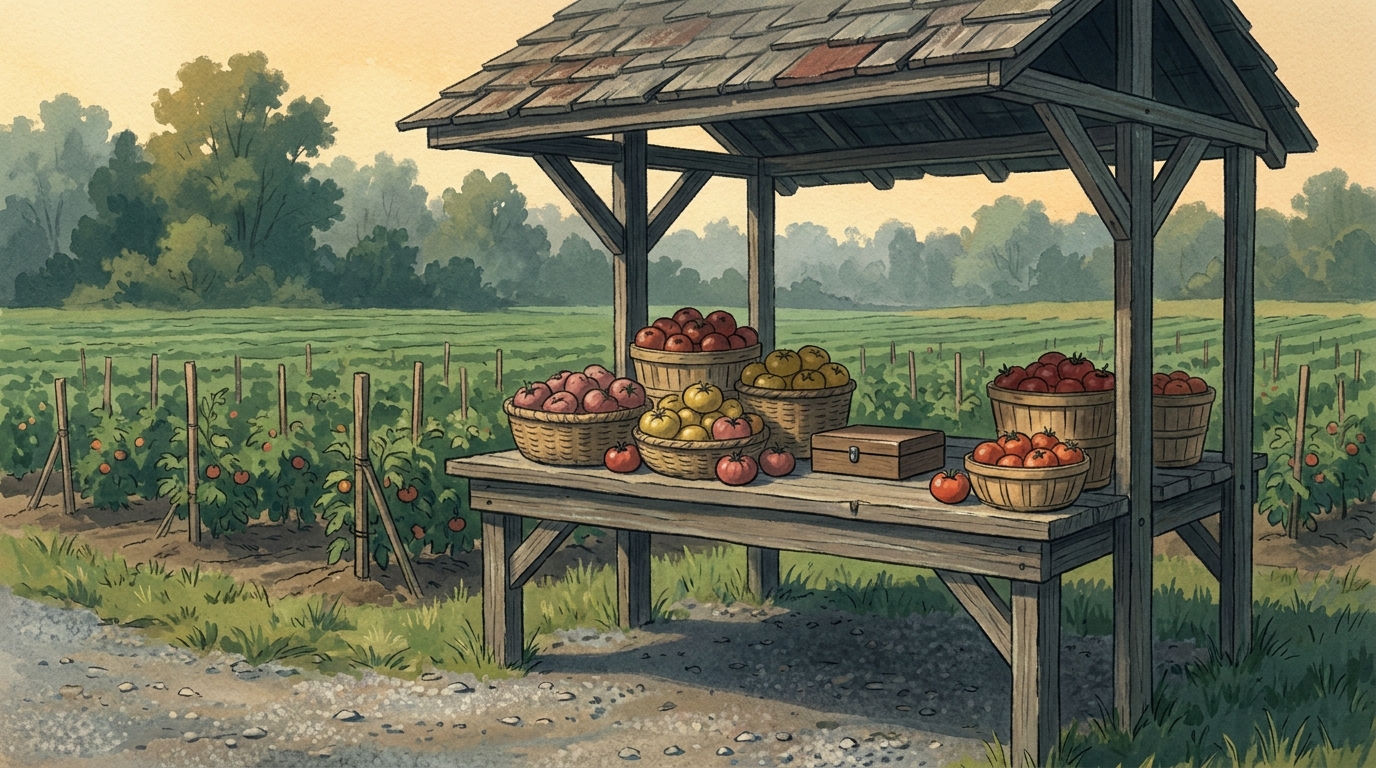
Look for stands along the country roads in the east of the county, where growers sell straight from the field, often by the basket. Other good places:
- farmers markets in Ashland and Mechanicsville during the summer season
- pick-your-own farms, which often add tomatoes after strawberry season
- the Hanover Tomato Festival in July
- grocery stores in the Richmond area, which label local tomatoes in season
Be careful with signs. Because there is no protected label, “Hanover tomatoes” on a sign is a claim rather than a guarantee. Asking where the field is gets you a straight answer from most growers.
How locals eat them
Of all the recipes, the classic is the simplest: a tomato sandwich on soft white bread with mayonnaise, salt and black pepper, eaten over the sink in August. Ripe ones also go into salads, fresh salsa and slow-cooked sauce for the winter, and local cookbooks are full of other recipes. Store them on the counter rather than in the fridge, and eat them within a few days. Here in our part of Virginia, the best tomatoes rarely last that long anyway.
For more about the county where they grow, read our guide to Hanover County, Virginia.
Questions and answers
When is the Hanover Tomato Festival?
The festival is held every July at Pole Green Park in Mechanicsville. Entry is free. In 2026 it took place on July 10 and 11.
Can I grow Hanover tomatoes in my own garden?
You can grow the same varieties, but strictly speaking a Hanover tomato is one grown in Hanover County. Well-drained loamy soil and full sun give the best results.
Should Hanover tomatoes go in the refrigerator?
Keep ripe tomatoes on the counter and eat them within a few days. Cold storage dulls the flavor.
Sources
- Virginia Cooperative Extension: Tomatoes
- VPM News: Curious Commonwealth asks why Hanover County tomatoes are famous (2026)
Last reviewed: